
Cannes 2026 market: The 5 existential questions from the most buzzed North American films

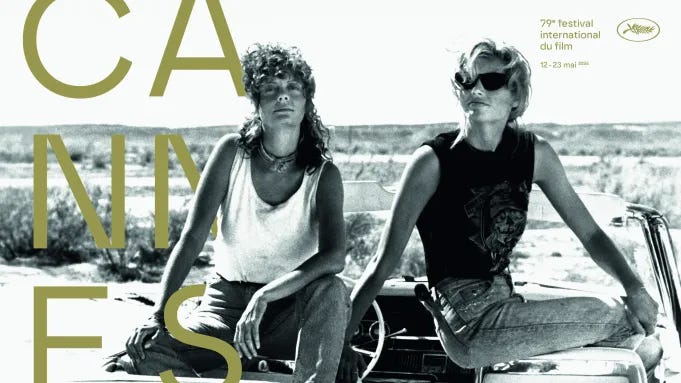
Every year at this time, the prestigious Cannes Film Festival and market take place in France. I love this festival and am grateful to have attended many times over the years with my movies. This year, a few of my friends’ films made the Screen Daily selection of “buzziest projects from North America” at the market. These are movies made without distribution but are the hottest for sale on the market. I thought it could be fun to look at these stories from a psych perspective. It is always fun to know what the smartest filmmakers out there, such as Doug Liman, Paul Feig, or Robert Rodriguez, are pouring their blood, sweat, and tears into. These films have the potential to shape our current discourse and culture, so let’s dive in.
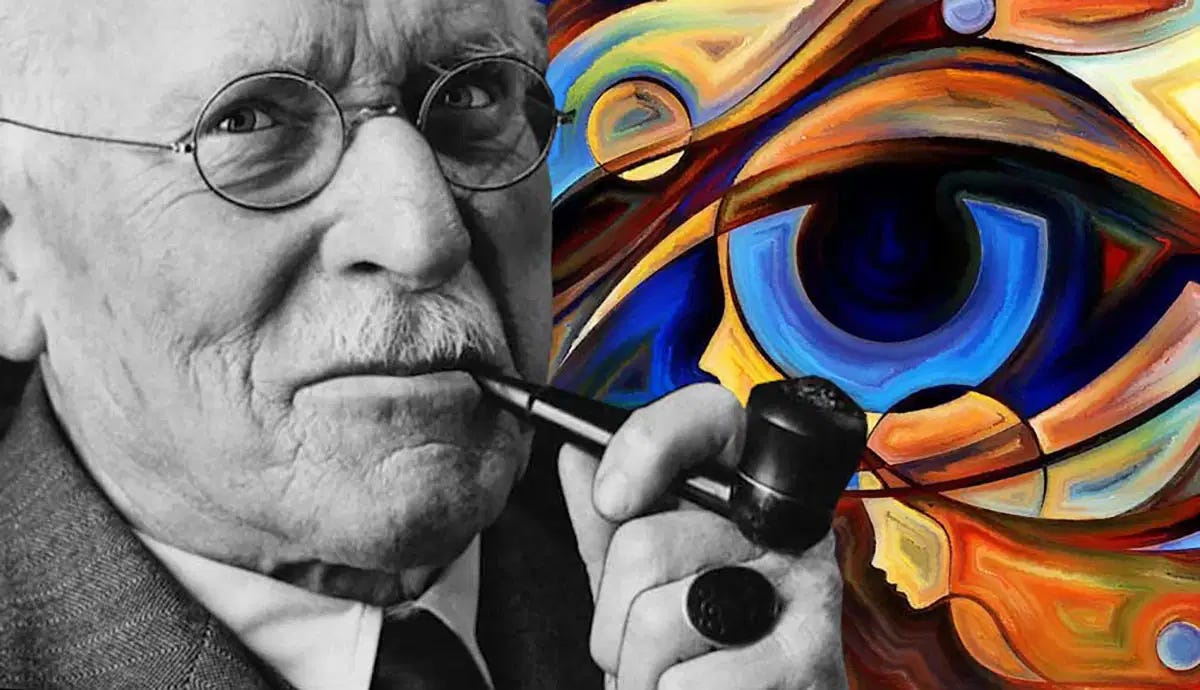
The collective unconscious (a definition) by Carl Jung:1
The deeper layer I call the “collective unconscious.” I have chosen the term “collective” because this part of the unconscious is not individual but universal; in contrast to the personal psyche, it has contents and modes of behavior that are more or less the same everywhere and in all individuals.
Jung is not referring to the Freudian unconscious in terms of what we repress, but rather to the cultural aspects of our shared histories that continually evolve and become part of our stories or those “moments when our own historical and cultural situatedness comes into view.”2 This is why we look at stories (or movies) to reveal our identities, our histories, and sometimes even our psychological situatedness in the world.
Disclosure: I may be looking too closely at these buzworthy narratives for some greater meaning, but honestly, this essay is meant to be more fun and hypothetical than academic or conclusive. If anything, aspiring screenwriters and storytellers can use it to see what producers and audiences might be looking for in the next few years or inspire them to tackle that existential story they may have tucked away somewhere.

Overall, these films’ storylines evoke many existential questions, which are important because they act as catalysts for self-discovery, emotional resilience, and intentional living.
Existentialism’s first move is to make every man aware of what he is and to make the full responsibility of his existence rest on him. (Jean Paul Sartre)
Underneath many existential questions can often lie fear, anxiety, cognitive dissonance, and trauma, so let’s explore 5 existential questions and their psychological underpinnings in these buzzy movies.
1. How do we navigate uncertainty if the whole system is built on lies?

Buzzed movies of note:
Bitcoin (Killing Satoshi) follows a real-world conspiracy of one man’s quest to prove he is the pseudonymous creator of Bitcoin (Directed by Doug Liman, starring Casey Affleck).

Reset’s Priyanka Chopra Jona Reset is the story of a woman who wakes up in the wilderness with no recollection of how she got there and must rely on a stranger who may not be who he says he is (Directed by Matt Smukler, starring Priyanka Chopra Jonas and Orlando Bloom).

Psychological Underpinning: Anxiety (see my Substack, Le Ballet mécanique as anxious technophilia disorder, for more on anxiety in our culture).
2. Can anyone truly know someone else?

Buzzed movies of note:
Asymmetry is a movie in which a chance encounter in New York’s Central Park leads to an affair between a much younger editorial assistant and an older novelist. Everything is put at risk once they are exposed (Directed by Ed Zwick, starring Richard Gere).
Bulls is an erotic thriller about a man who visits a hedonistic resort in the hope of returning a changed man for his girlfriend (Directed by James Morosini, starring Dylan O’Brien).
Psychological Underpinning: Attachment (see my Substack, Does Attachment Style Matter? (and the answer is “yes”).
3. What happens if we lose our moral compass?
Buzzed movies of note:
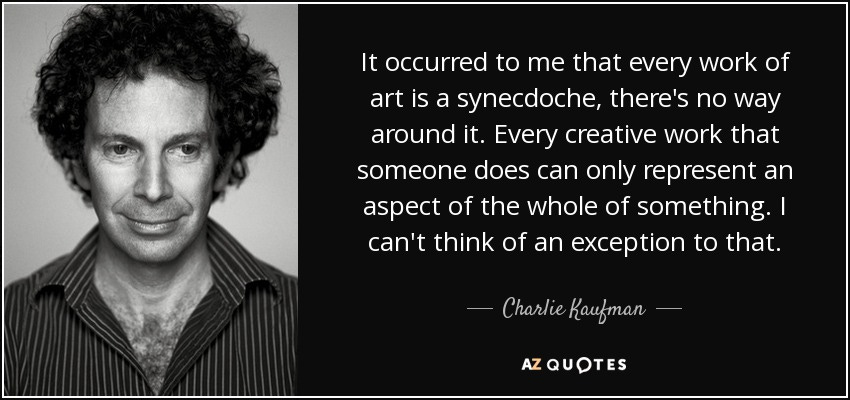
Later the War follows a comedy superstar in a shaky marriage who turns to a Holocaust film in a bid for dramatic legitimacy (Directed by Charlie Kaufman (pictured above), starring Channing Tatum).
The Passenger follows a businessman in a state of deep denial and delusion, believing that the next destination or acquaintance will restore him to the normal, prosperous life he once knew (Directed by Magnus von Horn, starring Jeremy Strong).
*Also, Bitcoin, The Passenger, Reset, Killing Kelly, Bulls look at this question.
Psychological Underpinning: Cognitive Dissonance (see my Substack, "I look at you with feelings," for more on this).
4. How does power and performance distort intimacy and desire?
Buzzed movies of note:
The Housemaid’s Secret is the sequel to this year’s hit, “The Housemaid” (above). The horror stems from psychological fear rather than the supernatural, as Millie (Sydney Sweeney) accepts a job keeping house for a woman she is never allowed to see, who threatens to expose secrets far darker than her own (Directed by Paul Feig).
Killing Kelly is a dark comedy/horror that tells the story of an abusive boss who is killed by his long-suffering employee, who is a taxidermist who uses his skills to wear the dead man’s skin (Directed by Iain Softley, starring Jason Isaacs).
*Also, Asymmetry, Bulls, The Passenger, and Bitcoin tackle this question.
Psychological Underpinning: Selfhood (see my Substack post, "Learn about your strengths").
5. Can we heal from trauma?

Buzzed movies of note:
Hold on to Your Angels is about an outlaw and a shepherd of lost souls who fall in catastrophic love against the backdrop of their crumbling bayou paradise (Directed by Benh Zeitlin, starring Jessie Buckley and Paul Mescal).
*Also, Reset, The Passenger, and Killing Kelly explore this question.
Psychological Underpinning: Trauma (see my Substack post, “It Felt Like a Brick Hit My Head” to read more about trauma).
Personally, I can’t wait to watch these films! Let’s go, Cannes!
If you found this interesting, I’d love to have you along for more conversations like this over on my Substack. You can subscribe to stay connected.
Jung, C. G. 1983. e essential Jung. Ed. Anthony Storr. Princeton: Princeton University Press
Freeman, M. (2002). Charting the narrative unconscious: Cultural memory and the challenge of autobiography.