
Finding the real silver lining
how optimism bias shapes our lives

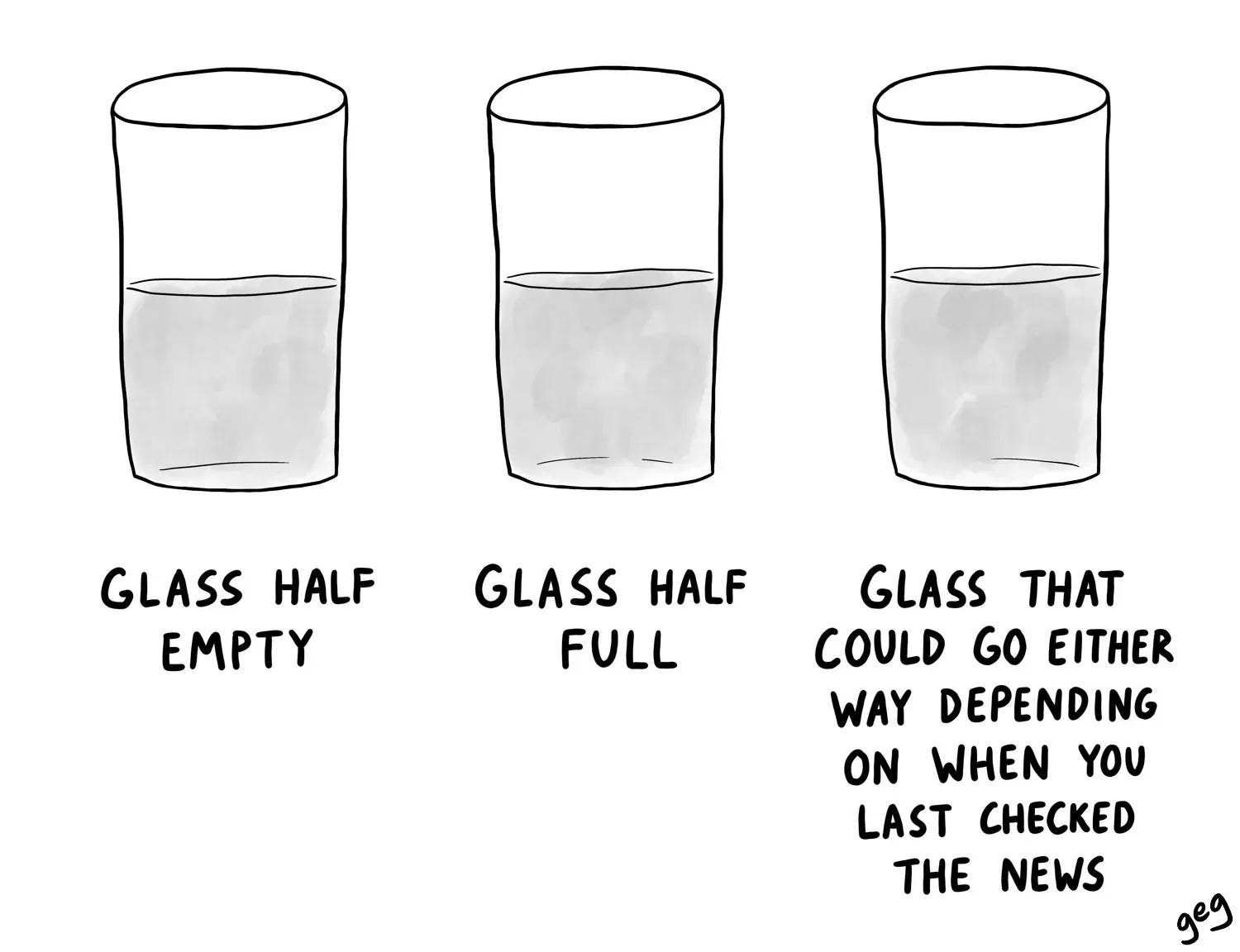
Do you know that phrase - “Are you a glass half empty or glass half full kind of person?” If you see a glass with water halfway up, do you think, “That is half full,” or do you think, “That glass is half empty.” Maybe you look at the glass and don’t think either - you just think, “that glass could go either way depending on when you last checked the news,” as Greg Nussbaum joked in his New Yorker cartoon. Your outlook on the glass is meant to be a metaphor for how you approach life: either optimistically, pessimistically, or perhaps philosophically.
What’s interesting is that we, in general, as humans, exhibit a pervasive and surprising bias when it comes to predicting what will happen to us next week or twenty years from now. We tend to overestimate the likelihood of positive events and underestimate the likelihood of negative events.
For example, we tend to minimize our chances of getting divorced (or why would we get married?), being in a car accident (or we wouldn’t drive), or suffering from cancer (or we would just be depressed all the time). We also expect to live longer than what research suggests, and we have plenty of time to do everything we want in life. We may miscalculate our success in our work and believe that our children will be more talented than other kids. These are the facts.
This phenomenon, in psychology, is known as optimism bias, and it is one of the most prevalent, insistent, and powerful biases documented in psychology and behavioral economics.1 It is estimated that almost 80% of the population displays optimism bias (or glass-half-full people), with the exception being people who live with mild to severe depression. Apparently, our frontal lobes prefer not to code prediction errors that would reduce positive expectations about our lives.
While this trait we have is clearly adaptive because we can’t just walk around thinking everything is doomed, it does have some disadvantages. If we think all is good and nothing bad will ever happen, then we may engage in riskier behavior like not getting insurance, not practicing safe sex, or getting that colonoscopy that your doctor keeps telling you to get. Additionally, thinking you will not get consequences later because you are thinking glass half full can actually promote doing harmful things to yourself, such as overspending, eating unhealthily, smoking, drinking too much, and so on. Our minds have evolved to fail to predict the future for survival and emotional and social reasons, rather than for a realistic and rational understanding of how things are.
We may believe that bad things happen to other people but not to me, but knowing and understanding that our brains evolved to think that way is important to help us see life more realistically and perhaps even get that colonoscopy that the doctor keeps telling us to get. In relationships, you may be telling yourself everything will work out, but you don’t do anything to make it better. You don’t change your communication or set better boundaries. Wishful thinking does not make a good relationship or marriage. In other words, understanding optimism bias can help you gain more insight to make better decisions about your future and confront difficulties with more courage and realism.

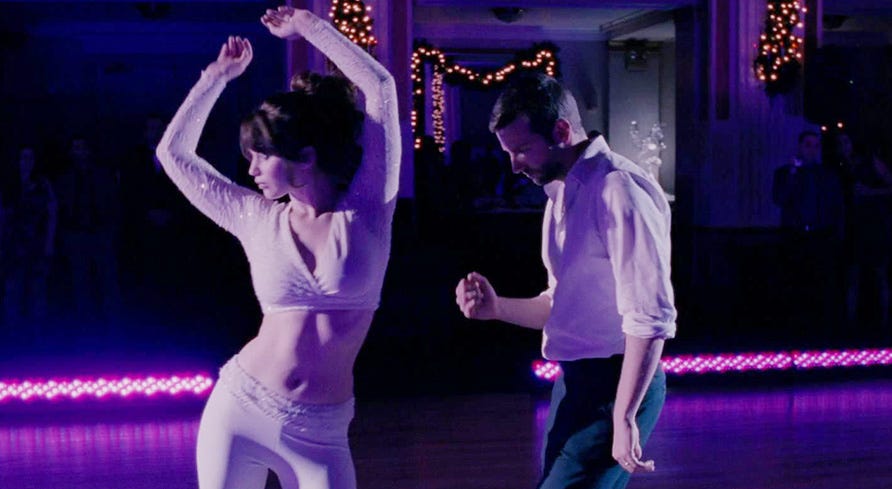
Movie: Silver Linings Playbook
Instagram: See my new reel and post where I break down Pat’s blind optimism.
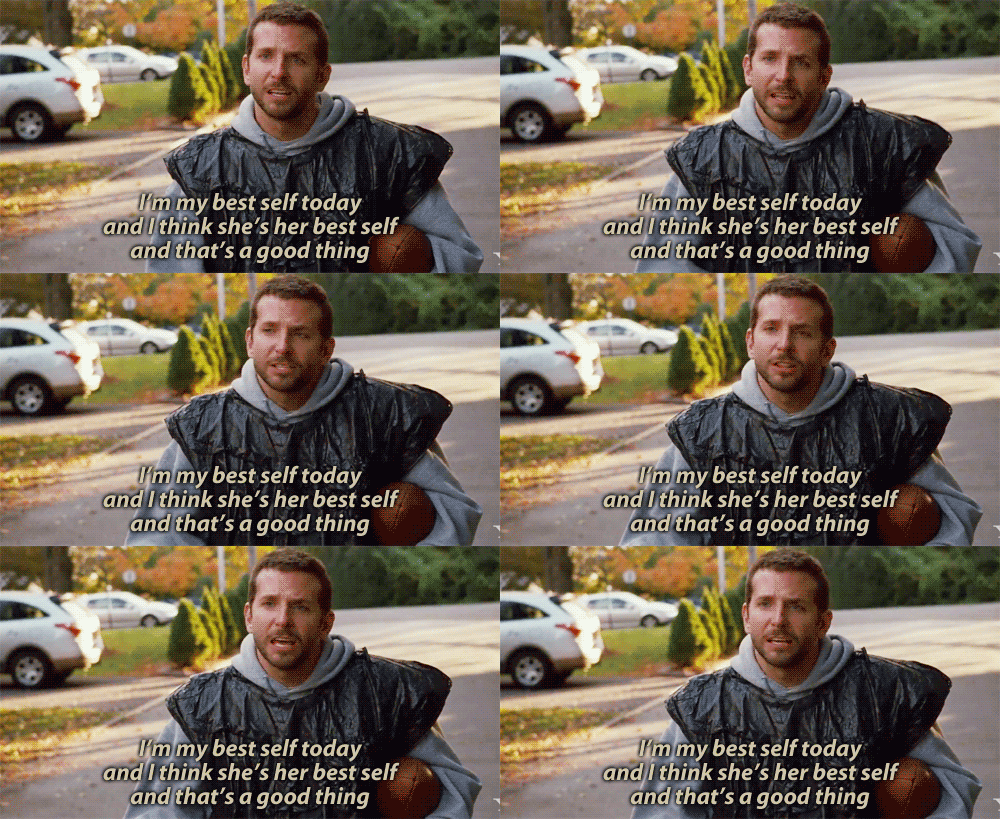
Summary: In Silver Linings Playbook, optimism bias is at the forefront when Pat Solitano Jr. (Bradley Cooper) is convinced that he can win back his estranged wife, which is virtually impossible and not happening under any circumstances. The film shows how optimism bias can prevent someone from grieving a loss and potentially recovering. Through his new relationship with Tiffany (Jennifer Lawrence), he shifts from an unrealistic to a more realistic outlook. Check it out!
Running time: 2 hours, 2 minutes
Streaming: Prime Video: Rent/Buy | HBO/MAX: Stream

I shared why I think we should bring back romcoms. If you need a list of romcoms that teach us about dating and love, here are my top suggestions.
Based on research from Tali Sharot (2011). The optimism bias. Current Biology, 21(23).
This is awesome info :) Yes- in our fam we are VERY familiar with the "saying"! LOL:)
Having spent a lot of my life as a 1/2 empty , I am grateful I have worked hard and can now say I am a 1/2 full! :) xx